One sync placement can pay more than a year of streaming. That is not hype: streaming pays fractions of a cent per play, while a single national ad placement is negotiated in the tens of thousands. This is the number that makes sync worth understanding, so here is what placements actually pay in 2026 — and why every deal is really two payments, not one.
For the wider picture on how sync works and how to get placed, start with our guide to sync licensing. This piece is about the money.
Every placement is two fees, because every song is two copyrights
Before any figure makes sense, one structural fact: a recorded song is two separate copyrights. The composition (melody, lyrics, chords) is one; the master recording is the other. A sync deal therefore needs two licences — a synchronisation licence for the composition and a master use licence for the recording.
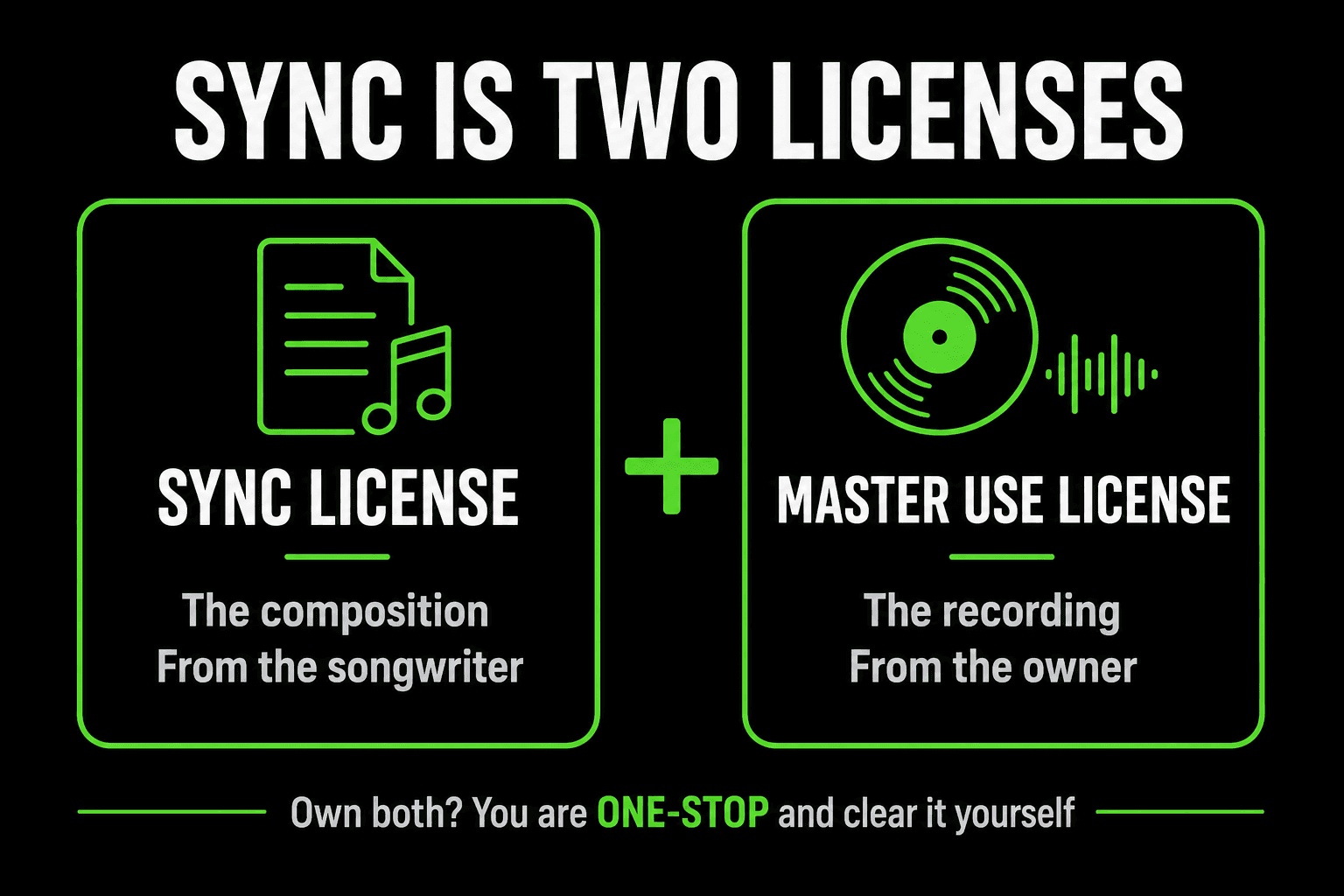
Fees are usually quoted all-in — the two sides combined, typically split 50/50 under a most-favoured-nations clause. If you wrote the song and own the recording, both halves come to you. That is the single biggest lever on what you take home.
What placements pay in 2026
Sync fees are privately negotiated and never published by any governing body, so no official rate card exists. The ranges below are the consensus across multiple industry rate guides — treat them as realistic order-of-magnitude, not fixed prices. They are upfront fees only, and they exclude the backend royalties covered further down.
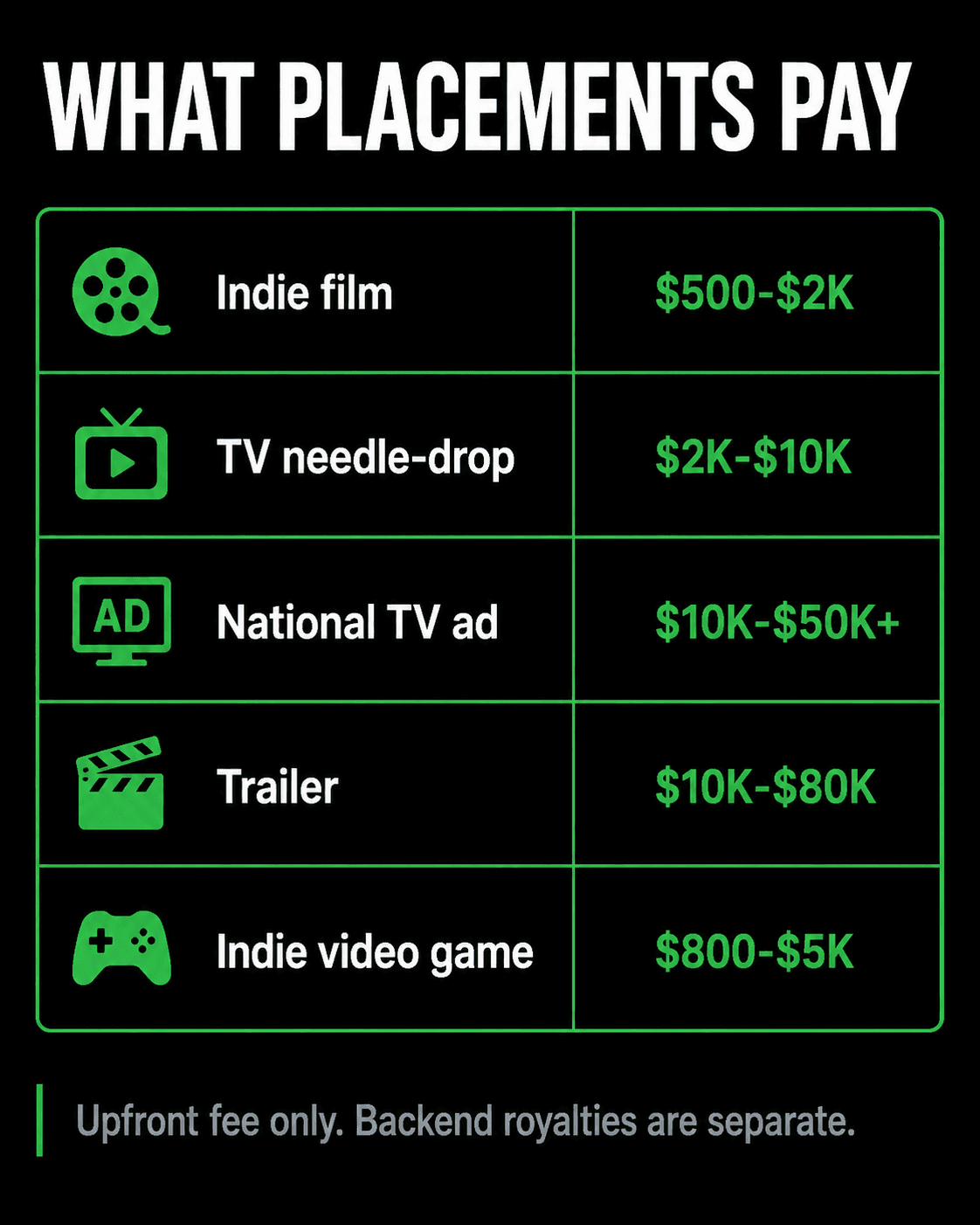
- Student, festival and micro-budget film: roughly $500–$2,000.
- TV background or needle-drop (a cable episode): roughly $2,000–$10,000.
- National TV commercial (US): commonly $10,000–$50,000, with global major-brand campaigns reaching $100,000 and beyond.
- Theatrical trailer: roughly $10,000–$80,000, and blockbuster placements can go higher.
- Indie video game: roughly $800–$5,000; AAA titles run far higher.
- Streaming-service original (Netflix, Apple TV+): roughly $2,500–$15,000.
- YouTube, social and podcast micro-syncs: from a few dollars to a few hundred, occasionally more for large campaigns.
The spread is enormous because budget, term, territory, media and exclusivity all move the number. A one-year, one-territory, digital-only use is a fraction of a worldwide, all-media, in-perpetuity buyout.
The upfront fee is only half the money
The quoted fee is a one-time payment for the licence, usually paid within 30–90 days. It is not the whole story. When the content actually airs, a second stream of income begins.
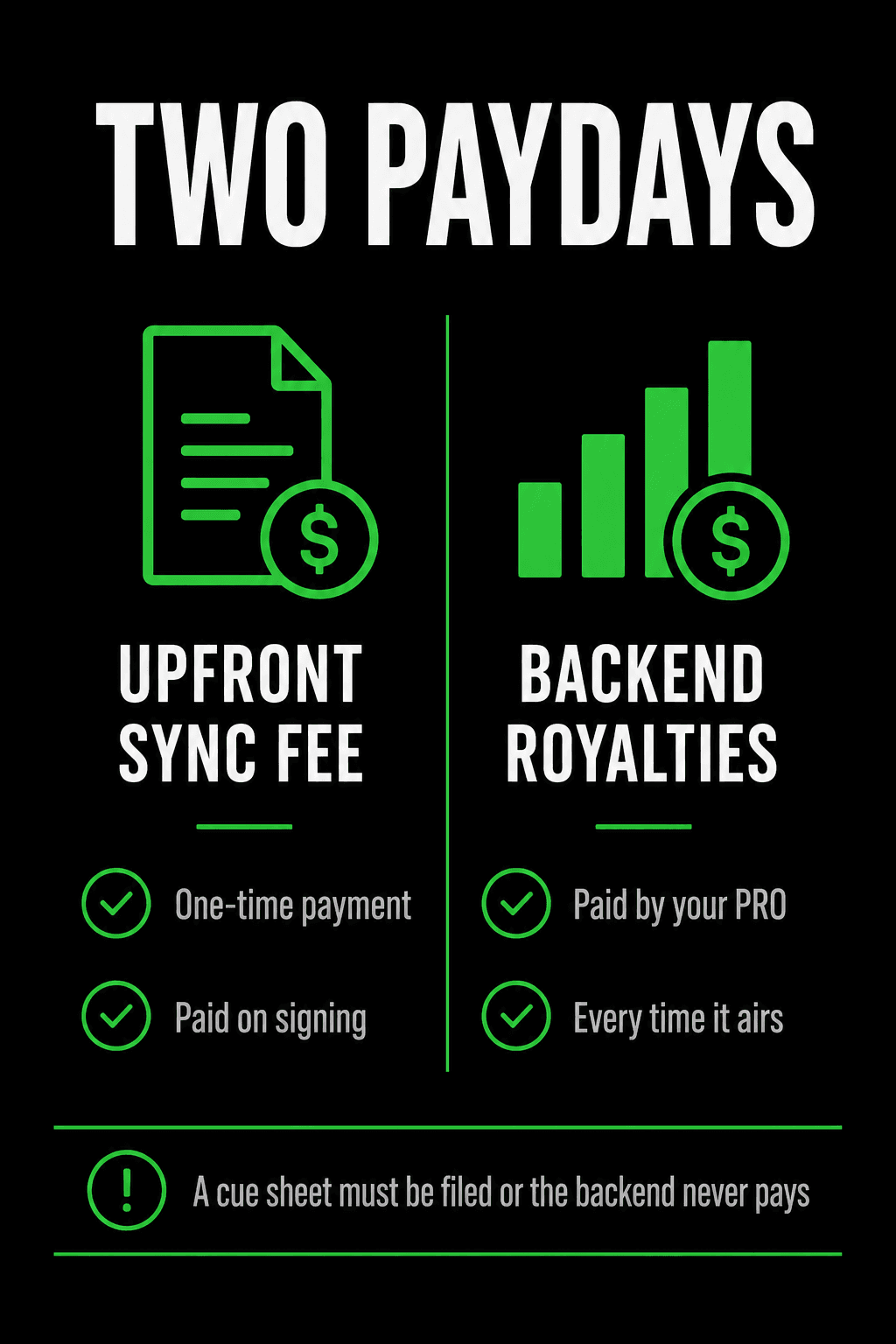
Backend performance royalties are paid by your performing rights organisation (ASCAP, BMI or SESAC in the US) every time the placement is broadcast, streamed or performed publicly. These are automatic and separate from the sync fee, and for a placement that reruns for years they can eventually exceed the upfront.
One catch decides whether you ever see them: the production must file a cue sheet with the PRO, logging what music aired, where and for how long. No cue sheet, no backend. Two things follow from this — register with a PRO before you pitch, and confirm cue sheets get filed. Beware buyouts (common in games and corporate work), which are a single flat fee with all backend waived.
How much of it you actually keep
Here is where most artists lose money they never see. If you place through a library or agency, they take a cut — often 30–50% — and exclusive libraries lock the track so you cannot pitch it anywhere else. The fee on the rate card is not what lands in your account.
The alternative is to license direct. If you own both copyrights you are one-stop: you can grant both licences yourself, negotiate your own fee, and keep the entire cheque. That is exactly what the sync briefs board on Played is built for, real paid briefs from TV, film, games and ads, pitched in-platform, with no cut taken on the deal. You license on your terms and keep 100%.
See sync licensing companies for how the middleman routes compare, and how much artists make per stream for the contrast that makes one placement worth chasing.
The bottom line
Sync pays real money; hundreds for a small indie use, tens of thousands for a national ad; and every deal is two fees: an upfront cheque plus backend royalties that pay for years if the cue sheet is filed. What you keep depends on the route. Pitch direct, own both copyrights, and keep the whole thing. Open your storefront on Played and pitch the sync board yourself.