Getting your music into a film or a TV show is not luck, and it is not who you know as often as people assume. It is mostly preparation. Supervisors work to brutal deadlines, and they pick the track that is ready to use right now and clears without a fight. This guide is about being that track.
For the money behind these placements, see how much sync placements pay; for the full overview, sync licensing.
What licensing for film and TV actually involves
A screen placement needs two permissions, because a song is two copyrights: a synchronisation licence for the composition and a master use licence for the recording. On a production, the person who decides which music is used — and who chases those licences — is the music supervisor. Reaching them, and being easy to say yes to, is the whole game.
What makes a track sync-ready
A great song that is not delivery-ready loses to a good song that is. Before you pitch anything, have these in hand.
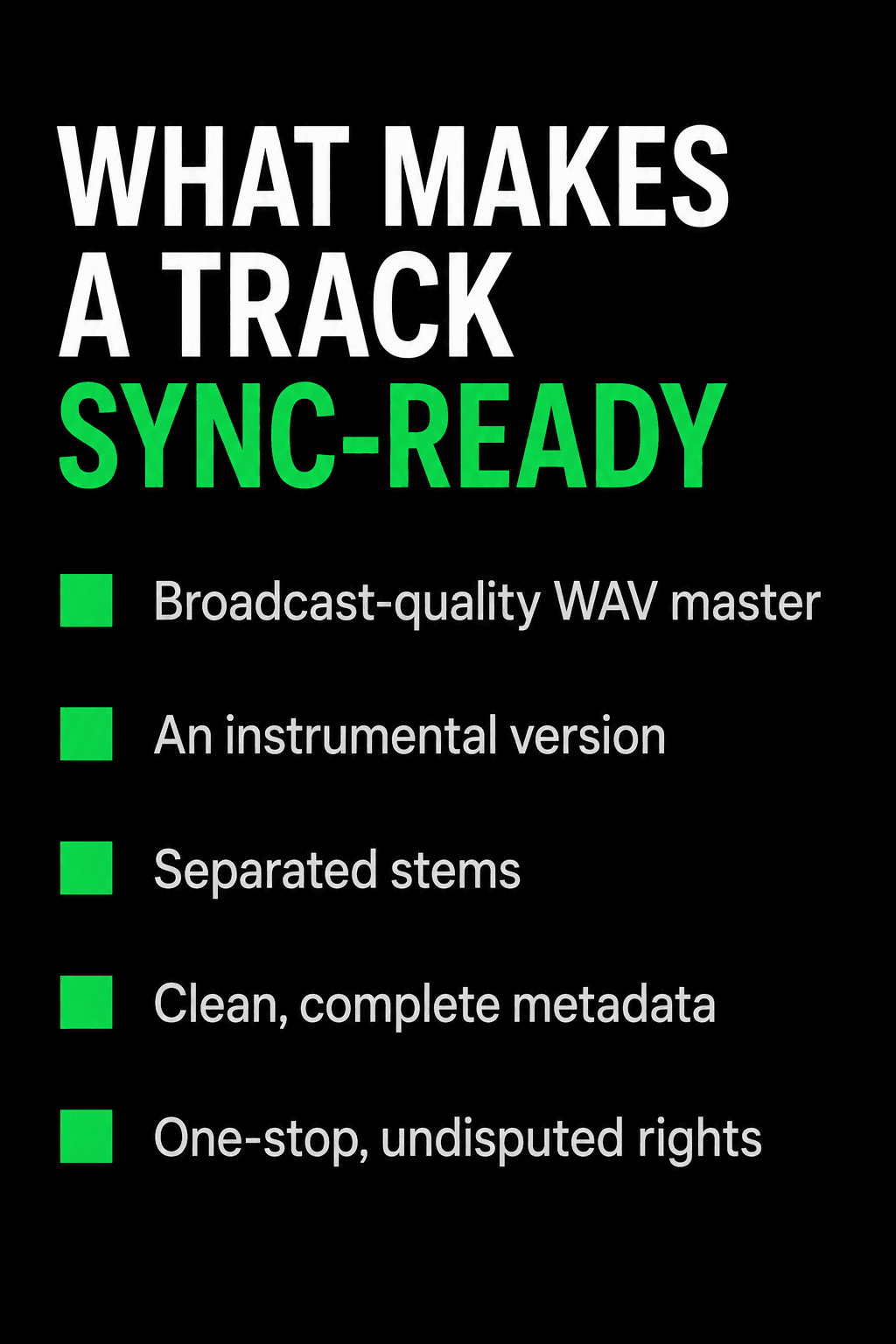
- A broadcast-quality WAV master — clean, loud enough for broadcast, with headroom.
- An instrumental version. Dialogue sits over music constantly; a track with no instrumental gets skipped, no matter how good the song is.
- Separated stems so an editor can re-cut the music to the scene — drop the drums under dialogue, swell the strings on a cut.
- Clean, complete metadata — genre, mood, tempo, instrumentation, and your contact and ownership written into the file.
- One-stop, undisputed rights — one party controls both copyrights, so the track clears instantly.
What music supervisors actually want
Everything above rolls up into three things a supervisor is really scanning for.
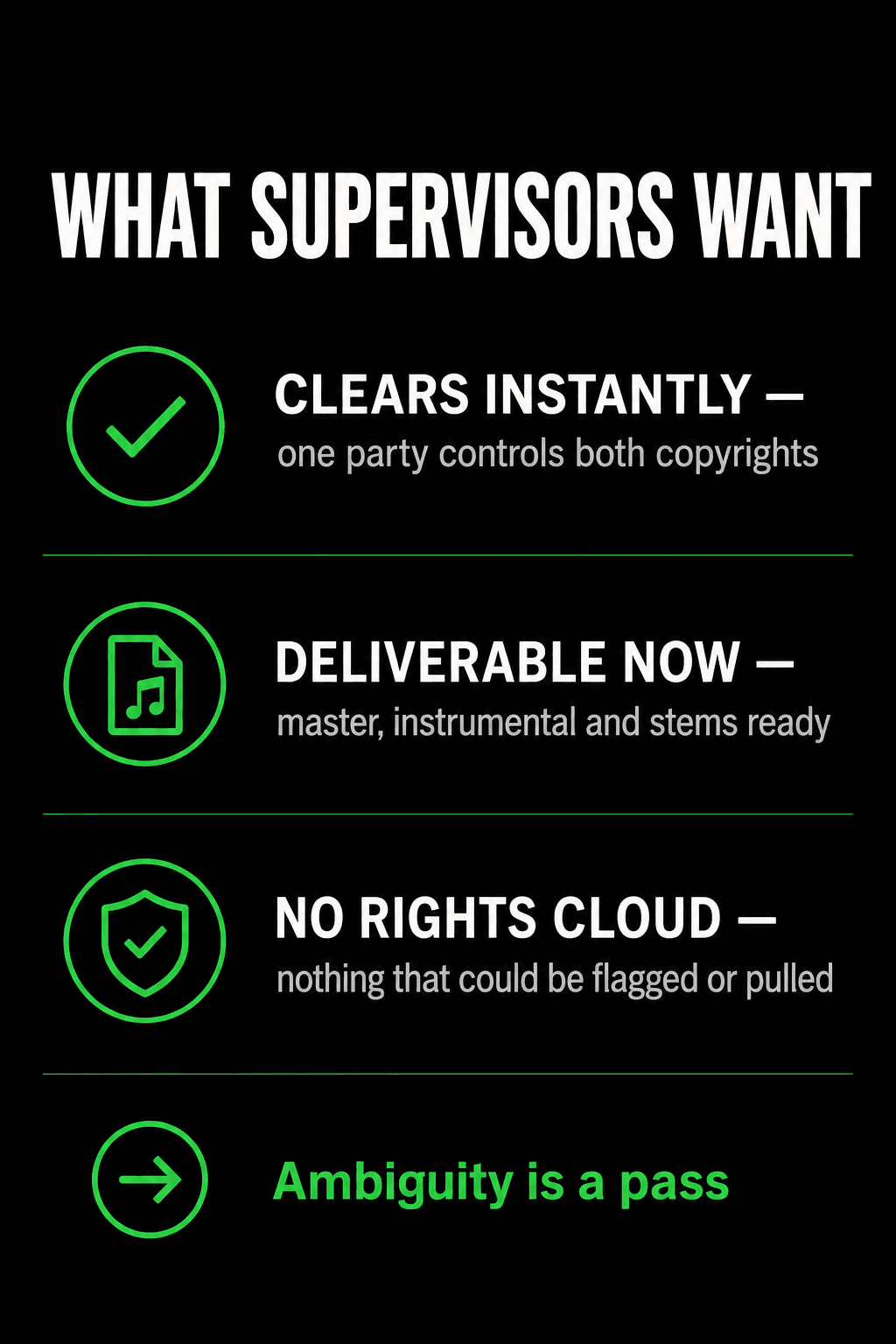
Supervisors carry real legal and financial liability if a cleared track later turns out to have contested ownership, an uncleared sample, or anything that could be flagged or pulled mid-campaign. So a track with a rights cloud is not a risk they take when a clean alternative is one click away. Ambiguity is a pass. The independent artist who owns everything, has the deliverables ready, and can sign the same day has a real structural advantage over a catalogue tangled in splits.
How to pitch — and keep the whole fee
There are two ways in. You can go through a sync library or agency, which reaches supervisors for you but takes a 30–50% cut or locks your track. Or you can pitch direct, which keeps the whole fee but has always been gated by access to briefs.
That access is what Played's sync briefs board provides. Real productions post paid briefs, TV, film, podcasts, games, ads, and you pitch your own catalogue directly, license on your terms, and keep 100%, because Played takes no cut of the deal. Have your master, instrumental and stems ready, keep your rights clean and one-stop, and you can answer a brief the day it lands.
The bottom line
Music licensing for film and TV rewards preparation over connections. Deliver a broadcast master, an instrumental and stems; keep your metadata clean and your rights one-stop; and make yourself the track a supervisor can license without a second thought. Then pitch direct and keep everything. Open your storefront on Played and start answering sync briefs.